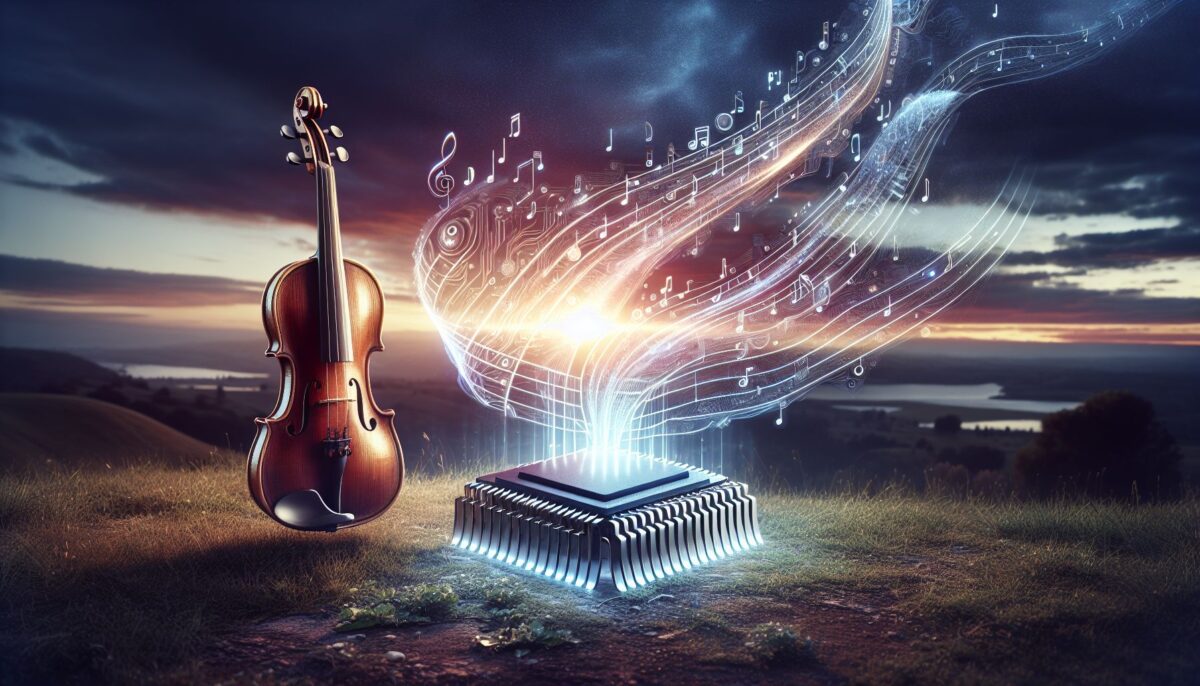
Hey, tech aficionados and music buffs! Strap yourself in because today, we’re diving into a world where machines are vibing to your favorite beats and maybe even writing the next chart-topper. That’s right, we’re talking about AI’s growing role in music creation. And believe me, it’s not science fiction anymore.
The Prelude: How Did We Get Here?
Let’s kick off with a fun fact. Remember when “autotune” was the hot buzzword? Everyone from Kanye to T-Pain was using software to tweak vocal intonation to pitch-perfection. Fast forward to now, and AI isn’t just ironing out sour notes. It’s composing symphonies! But how on Earth did we get here?
Once upon a time, creating music was a realm reserved for the gifted and the inspired. Then technology came along and passed the mic to everyone with a laptop and a dream. GarageBand broke down barriers to entry. SoundCloud democratized distribution. Now, AI is the hot guest DJ, ready to revolutionize how we understand music again.
How, you ask? Companies like OpenAI with their MuseNet can simulate the styles of legendary composers and contemporary artists alike. It’s like having a jam session with Beethoven and Billie Eilish at the same time, without the obvious generational awkwardness.
Virtuoso Machines: What Can AI Do So Far?
So, what’s on AI’s resume in the music biz? Well, we’re talking about an assistant who doesn’t steal the spotlight but works its magic quietly.
Composition
AI’s ability to generate music via neural networks is honestly mind-blowing. Look at machine learning models and you’ll find a library of sound patterns and musical elements that get mixed into original tracks. Dr. Dre better watch out, because AI’s beats are legit. Sure, AI isn’t penning the lyrics to rival Bob Dylan, but it’s becoming a solid collaborator for creating instrumental tracks.
Analysis and Recommendation
Remember when you logged into Spotify and wondered how it always knew exactly what you wanted to hear? Thank AI for that “Discover Weekly” playlist, my friends. Machine learning algorithms analyze your listening habits and serve up tracks that fit your vibe as perfectly as those Beats headphones you invested in.
Personalization
Have you heard of the “AI Music Guy” who generates unique soundtracks for gamers and developers? Imagine booting up a video game, and the music is dynamically generated to complement your style of play. This isn’t just clubbing on a Friday night. It’s like the universe has its bespoke DJ for every moment of your life.
The Counterpoint: Balancing Creativity with Computation
Sure, AI is making impressive riffs, but some say it’s more synthetic than symphonic. Critics often argue that creativity is innately human, tied to emotion, history, and culture. But maybe AI’s strength isn’t in replacing artists. Maybe it’s in amplifying them.
The Human Touch
AI doesn’t “feel” music. It processes it, identifies patterns, and builds upon them. Yet the essence of music, its je ne sais quoi, resides in emotional articulation. Artists bring passion and experience into their work, which AI lacks. However, could future versions simulate this emotional depth? It’s both terrifying and exciting to think about.
The Ethical Drumroll
Also, as with any new tech, ethical concerns arise. Who owns an AI-composed sonata? Is it the coder who designed the algorithm, the user who asked AI for “Beethoven meets Daft Punk,” or the corporation owning the AI? The music industry faces complex intellectual property challenges, like navigating a maze with shifting walls.
Crescendo: The Future of AI in Music
So, where do we go from here? Speculation alert: We’re on the brink of a Phillip K. Dickian world where AI not only composes but collaborates in real-time performances. Imagine a concert where AI enhances the live set, creating an immersive, reactive experience based on audience feedback.
Democratization and Discovery
With AI tools becoming more user-friendly, we’ll see indie artists creating jaw-dropping experiences previously limited to major label acts. Picture immersive albums you listen to in VR, with an evolving soundtrack that changes based on your virtual location or even mood. It’s not just listening to music. It’s interacting with it.
Innovation or Insanity?
Let’s face it, folks. We’re standing at a crossroads of music and technology that previous generations could only dream of. Surely there’ll be hiccups, missteps, and probably a couple of hilariously bad AI-generated remixes along the way (note to self: remember to listen to that weird “Beethoven raps Kurzweil” track I stumbled upon).
The Final Beat
Alright, let’s take a breath after this tech jam session. I’m incredibly excited about how AI will redefine music creation and consumption, and I hope you are too. Yes, AI has a long way to go before it captures the soul of a Miles Davis solo or the raw power of a live Nirvana gig, but it’s well on its way to becoming a valuable partner in the creative process. I can’t wait to plug into the next phase of this musical evolution. How about you?
Feel free to drop your thoughts and let’s geek out over this techno-renaissance together. Whether you’re a purist or an enthusiast, let’s face it: AI isn’t just a passing trend in the song of technology. It’s becoming part of our digital soundtrack. What’s on your playlist today?
