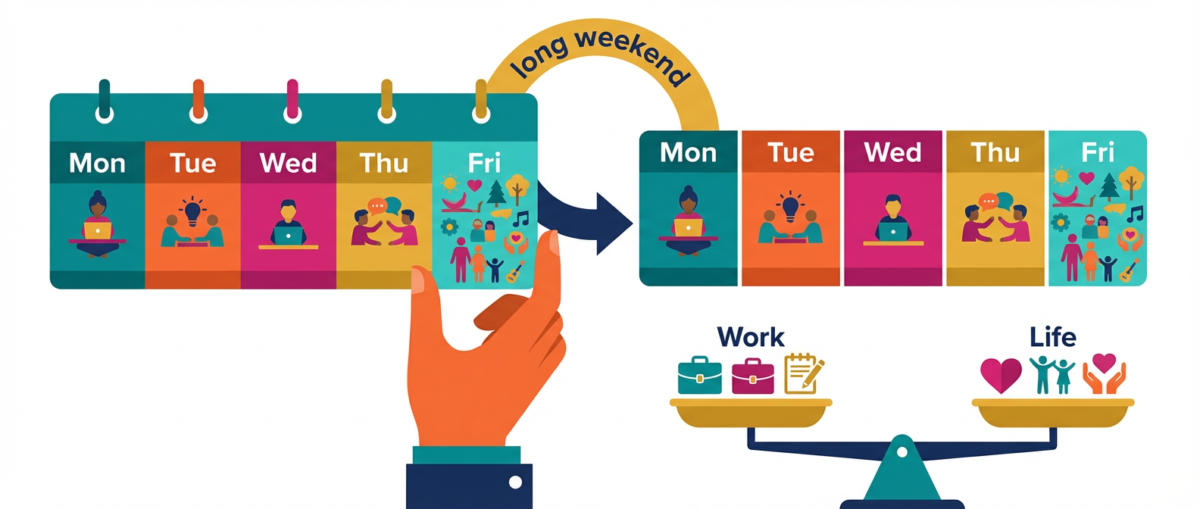
The Setup Nobody Warned Me About
When my company signed up for the 4 Day Week Global pilot last year, the announcement landed in Slack like most workplace initiatives do: polished, optimistic, vaguely threatening. We’d be part of something historic. We’d maintain full pay. We’d keep the same productivity. It all sounded rehearsed because it probably was. What I didn’t expect was how quickly it would stop feeling like an experiment and start feeling like the way things had always been.
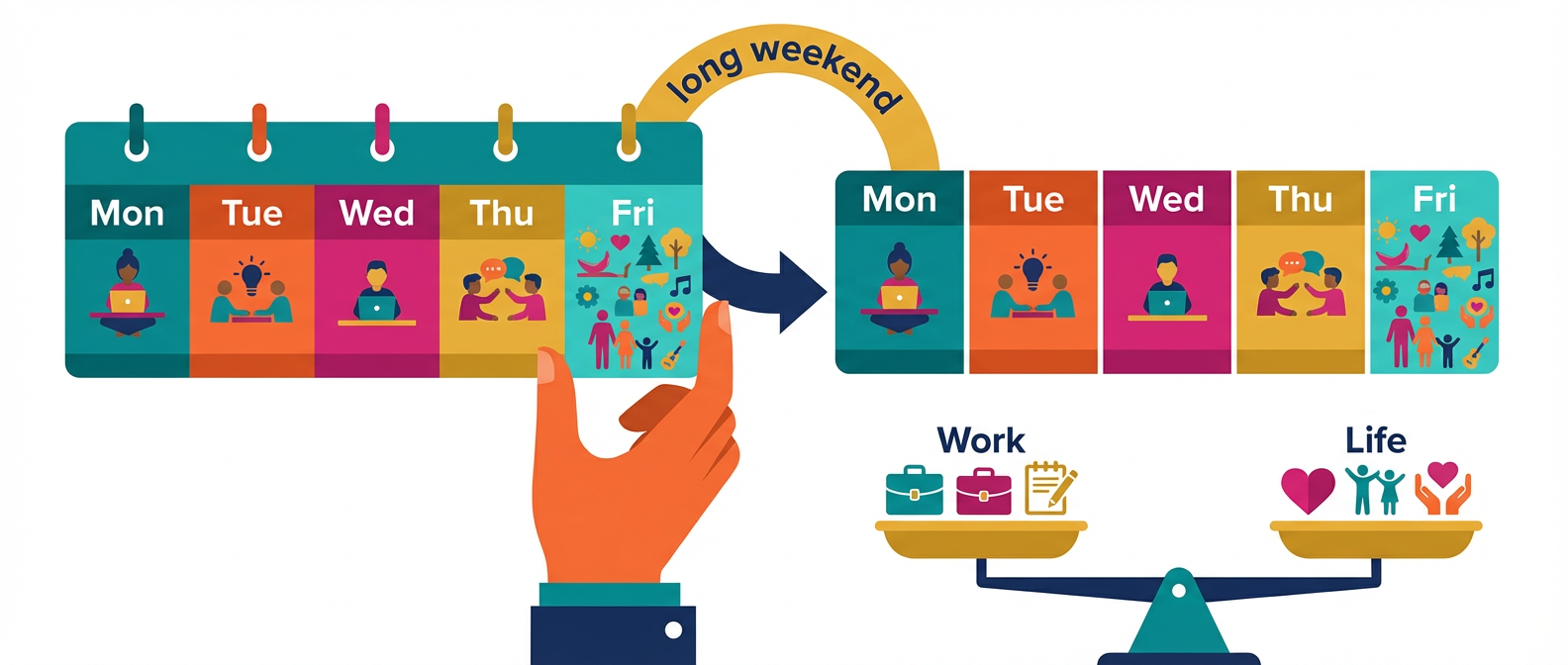
The pilot pulled together over 200 companies across the US, UK, and Australia. Massive scale. The kind of thing that makes you realize maybe this isn’t just some fringe startup thing anymore. People I know at different companies started texting me about their experiences. There was this weird solidarity forming, like we were all part of the same strange dream and needed to confirm it was actually happening.
Nobody really talks about the first week, though. That’s where the real story lives. My calendar looked like someone had used a red pen to cross out Thursday. Meetings that had always existed suddenly didn’t. Deadlines shifted. And there was this low-level panic underneath everything, this sense that someone had removed a structural beam and we were all waiting to see if the building collapsed.
The Thing That Surprised Me Most Wasn’t Productivity
Everyone kept asking if we were getting less done. That’s the question nobody can seem to shake. It’s what the Microsoft Japan experiment proved back in 2019 when they reported a 40% jump in productivity measured by sales per employee, and it’s what people cite when they want to sound credible about this whole thing. Productivity, productivity, productivity. The word started sounding like “insurance premiums” after a while.
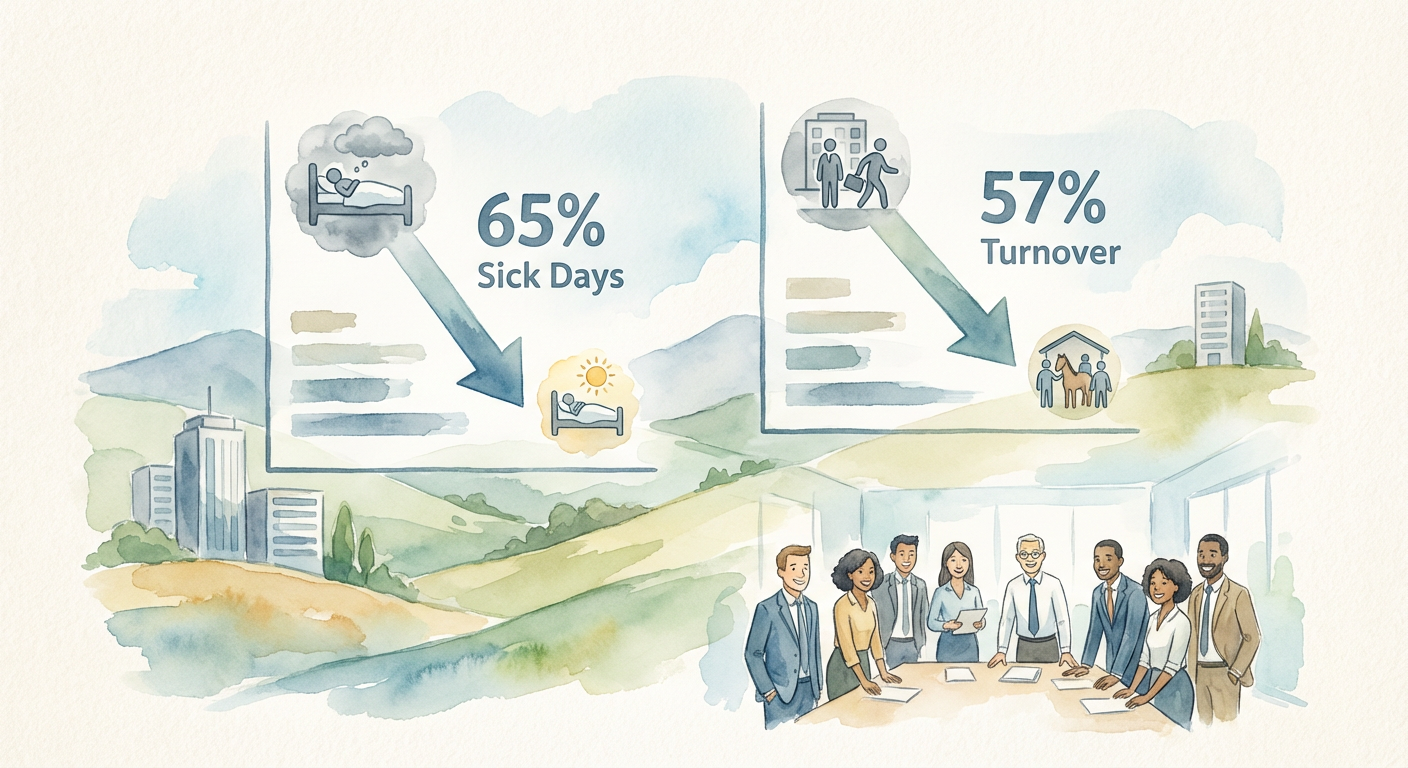
Here’s what actually surprised me: I stopped being exhausted in a way I didn’t know was possible. Not just less tired on Fridays. Something deeper had shifted. I realized around week three that I’d stopped thinking about work on my day off. The mental break was actually working. There’s research backing this up, and when I looked at the 4 Day Week Global pilot results and research, the numbers on sick days and turnover made sense in a way that felt almost obvious in hindsight. Seventy percent fewer sick days across the pilot. Over half the people who wanted to leave actually stayed. Of course they did. You don’t hate something less because you’re suddenly more efficient at it.
What got me was noticing the stuff around the edges. People actually taking their vacation days instead of letting them pile up. Someone in accounting mentioning they’d picked up a hobby. The coffee chatter shifted from complaint-heavy to almost neutral. That’s not quantifiable. Nobody’s measuring that in a dashboard. But it felt real in a way that productivity percentages don’t.
The Part Where Everyone Admits This Has Been Possible the Whole Time
By month four, about 89% of the companies in the pilot decided to keep the four-day structure permanently. At first, that felt validating. Then it felt uncomfortable. Because if this works, and we’ve known about it for years, and Iceland proved it at scale back in 2015 with 2,500 workers, and 86% of their entire workforce moved to reduced hours by 2021, then what were we all doing the five-day thing for? The honest answer seems to be: momentum. Tradition. The assumption that busy equals important.
Our CEO did the thing they always do in these situations. Sent a message about “taking this next step forward.” But forward from what, exactly? We’d been going the wrong direction the whole time. I noticed I was irritable about it, which felt strange. A win should feel good. Instead it felt like finding out your landlord could have fixed the leak the whole time.
The Gallup State of the Global Workplace 2025 report found that scheduling flexibility was the second-biggest factor keeping people at their jobs, right after pay. Second. Only behind money. That should have rattled executives, but mostly I watched people skim it and move on. The information was never the problem.
The Weird Liminal Space We’re In Now
We’re past the pilot now. This is just how we work. Which sounds like it should be straightforward, but it’s not. There’s this creeping sense that the experiment was the permission structure, and now that permission is gone, we’re just supposed to maintain this. Some teams drifted back toward checking Slack on Thursdays. Others built better boundaries. The change wasn’t automatic. It required constant small choices.
What I keep thinking about is that moment around week three when I stopped treating Thursday as a suspended day and started treating it like it actually belonged to me. That’s the real shift. Not the policy change. The mental adjustment. The belief that I deserved a day, and it was normal, and nobody was going to apologize for it.
I’m curious whether this holds a year from now. Whether it calcifies into “the way things are” or whether the five-day week gravitational pull wins and we all drift back. I’m also curious about your experience if you’ve been through something similar, or if you’re about to. The honest answer is I don’t know if this is sustainable long-term at scale. What I know is that for the last year, it worked, and I notice that I’m different now because of it.
