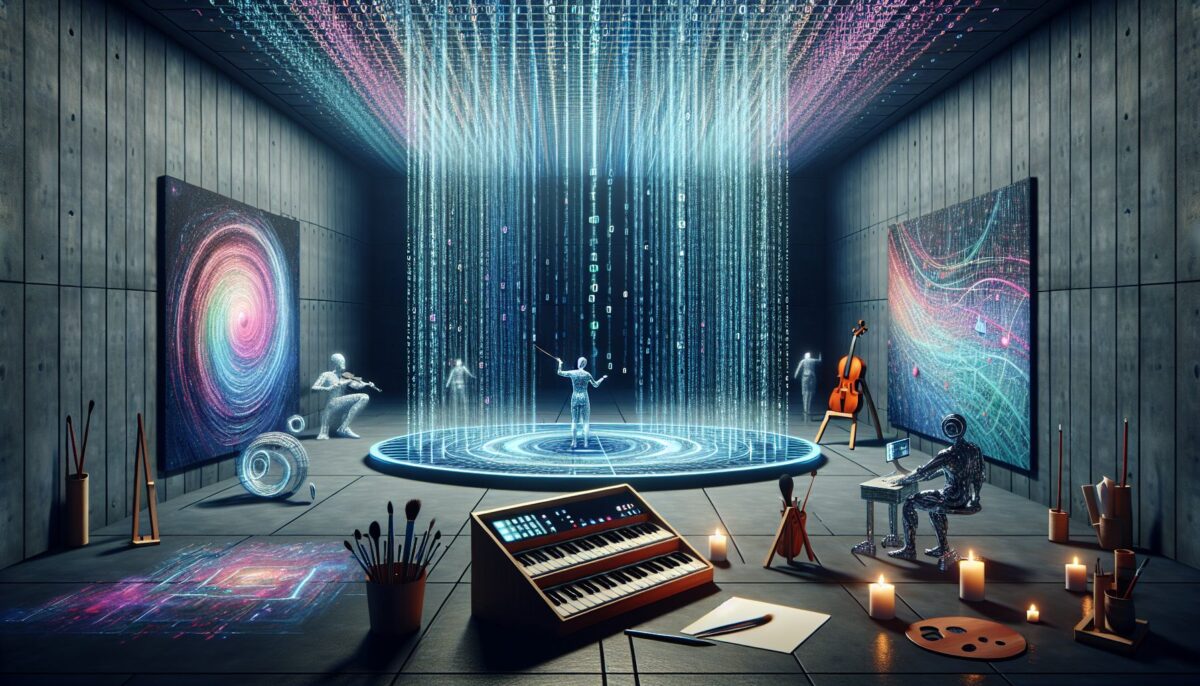
Hey tech enthusiasts! Grab your virtual paintbrushes and tune your digital violins because today, we’re exploring the wild world of Artificial Intelligence in creative arts. If you thought AI was just about data crunching or doing a robot’s version of homework, prepare to be surprised! Imagine a universe where Leonardo da Vinci’s genius is reborn through neural networks or where your Spotify playlist can predict the very song that will give you goosebumps. Spoiler alert: that’s becoming a reality.
Yep, AI is no longer the quiet geek in the back of the tech class. It’s up on stage with its own spotlight, reimagining creativity and artistry in ways we’ve barely started to explore. And honestly, I couldn’t be more excited to chat about it with you all today.
The Rise of AI Artists
First, let’s talk about how AI is stepping into the shoes of artists. Have you seen those AI-generated artworks that look like they belong in the Louvre? Well, the infamous AI artist, known as GAN (Generative Adversarial Network), is behind those masterpieces. GANs have two neural networks competing against each other until they’ve crafted something sensational. It’s like a digital dueling pianos scene but ends with a Van Gogh-esque painting instead of a Billy Joel song.
Take, for example, that art piece sold at auction for a cool $432,500. That’s not a typo! A piece dreamt up by algorithms fetched a price that would make even Michelangelo sweat. It’s fascinating how artists are using AI to fuel their creativity, blending human intuition with machine precision to produce art that challenges traditional boundaries.
AI as Your Bandmate, Not Your Replacement
Music is another place where AI is strumming those creative chords and making some noise. Platforms like Amper Music and OpenAI’s MuseNet are giving musicians tools that are downright magical. These AIs can suggest chord progressions, create entire soundscapes, or even compose symphonies in Beethoven’s style. And while there might be a knee-jerk worry about AI composing a track that puts your garage band out of business, fear not.
Musicians are playing alongside AI, not in competition with it. AI can be your ultimate bandmate, offering fresh ideas, correcting that tricky second verse, or creating a drum track that matches your vision. You do you. AI just helps make it pitch-perfect.
Catering to the Digital Muse
Now, if we shift over to writing, you might be thinking, “Hey, aren’t you doing this job right now?” True, but AI is also co-authoring novels and helping writers defeat the dreaded writer’s block. With tools like GPT-3, writers can bounce off ideas, collaborate on storylines, and even draft entire chapters with a little help from their friendly neighborhood algorithms. It’s like Google Docs but with a machine whispering story suggestions over your virtual shoulder.
But don’t worry, Shakespeare’s standing is safe for now. While AI can help lay down the literary foundations, it’s the human touch, that je ne sais quoi if you will, that gives stories their soul. AI might write a chapter, but it’s up to us to turn it into something that makes readers laugh, cry, or reach for that bestseller spot.
The Tech That Paints with Pixels and Beyond
Let’s have a quick chat about the tech itself. Advanced algorithms are getting artsy by understanding context, cultural nuances, and emotional triggers. Ever heard of the company DeepArt? It takes your favorite photo and transforms it into visual styles reminiscent of celebrated artists. Or consider Neural Painter, an AI that understands brush strokes to mimic that hands-on creativity.
AI’s toolset keeps expanding, with capabilities to match and sometimes surpass our wildest imaginations. As more artists embrace these tools, we’ll see richer, more diverse artworks that speak to a global audience.
Challenges on the Horizon
Of course, this techno-paradise isn’t without a few storm clouds. One challenge is the authenticity and ownership of AI-generated art. Who gets credit? The coder, the machine, or both? There’s also the question of creativity: can AI truly be creative, or does it only mimic creativity? These are hotly debated topics, and as AI continues to evolve, we’ll need maestros in law and philosophy as much as in art and code.
There’s also the sheer unpredictability of public reception. Remember Microsoft’s AI chatbot, Tay? We must ensure AI technology that creates doesn’t come with unpredictable outbursts or controversial statements. As AI in creative arts develops, it’s important to keep a taste-testing team of humans around to make sure we’re dancing to the right tune.
A Future Full of Fantasies
Looking ahead, the symbiosis of AI and the arts is a fascinating horizon. Imagine a world where your AI knows exactly when you need a creative nudge and spins up precisely what inspires you. Or a reality where you can engage with historical art in ways we’ve never even conceived. The potential for AI to democratize artistic creation is virtually limitless. You won’t just attend shows in virtual reality, you’ll create them.
As we journey forward, it’s important to keep the dialogue open and continue embracing this dance between human creatives and their artificial assistants. It’s like a never-ending jam session with rhythm, harmony, and just enough chaos to make it exhilarating.
So, let’s keep exploring and pushing boundaries. After all, the canvas might be digital, and the brushes made of code, but the heart of art remains unchanged. An expression of what it means to be delightfully, beautifully human.
Thanks for joining me on this artistic adventure! Stay creative, stay curious, and remember AI might help paint the picture, but we still choose the colors.
