The craft, infrastructure, and history of email and newsletters — read through dated artifacts.

Author: Sandra Olson (page 16 of 25)

I Deleted Instagram for Three Months After Reading the Surgeon General’s Social Media Warning — Here’s My Honest Report Card

The Thing That Made Me Actually Do It

I read the Surgeon General’s advisory on social media and youth mental health like most people read warnings on cigarette packs: acknowledged it existed, felt vaguely concerned, scrolled past it. But then in early 2024, something shifted. Maybe it was the accumulation of small moments where I’d opened Instagram to check one notification and lost an hour. Maybe it was noticing my own face in the phone’s camera reflection while I was mid-scroll, looking exactly like the kind of dopey expression I’d be embarrassed about. Or maybe it was just that I’d finally hit whatever invisible threshold where the thing you’re doing stops feeling neutral and starts feeling like something’s doing you.
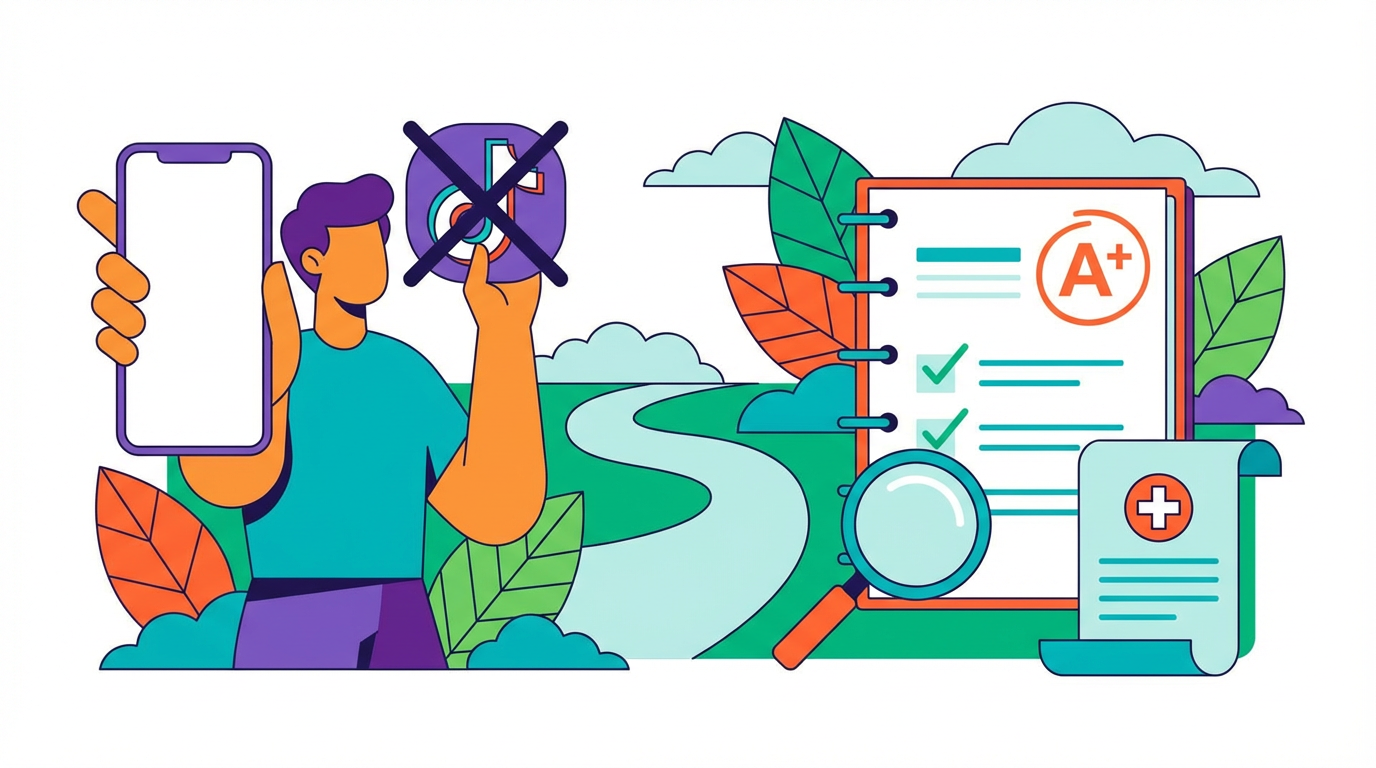
I Deleted Instagram for Three Months After Reading the Surgeon General's Social Media Warning — Here's My Honest Report Card
I Deleted Instagram for Three Months After Reading the Surgeon General’s Social Media Warning — Here’s My Honest Report Card

The Surgeon General’s advisory on social media and youth mental health had called the issue a “profound risk.” Dr. Vivek Murthy wasn’t hedging. And then things got more concrete when Congressional testimony rolled around in 2025 with talk of warning labels the way we slap them on cigarettes. I’m an adult, not an adolescent, so technically this wasn’t my problem to worry about. Except I’d been watching my relationship with the app change since my twenties, and I wasn’t sure I liked where it was heading.

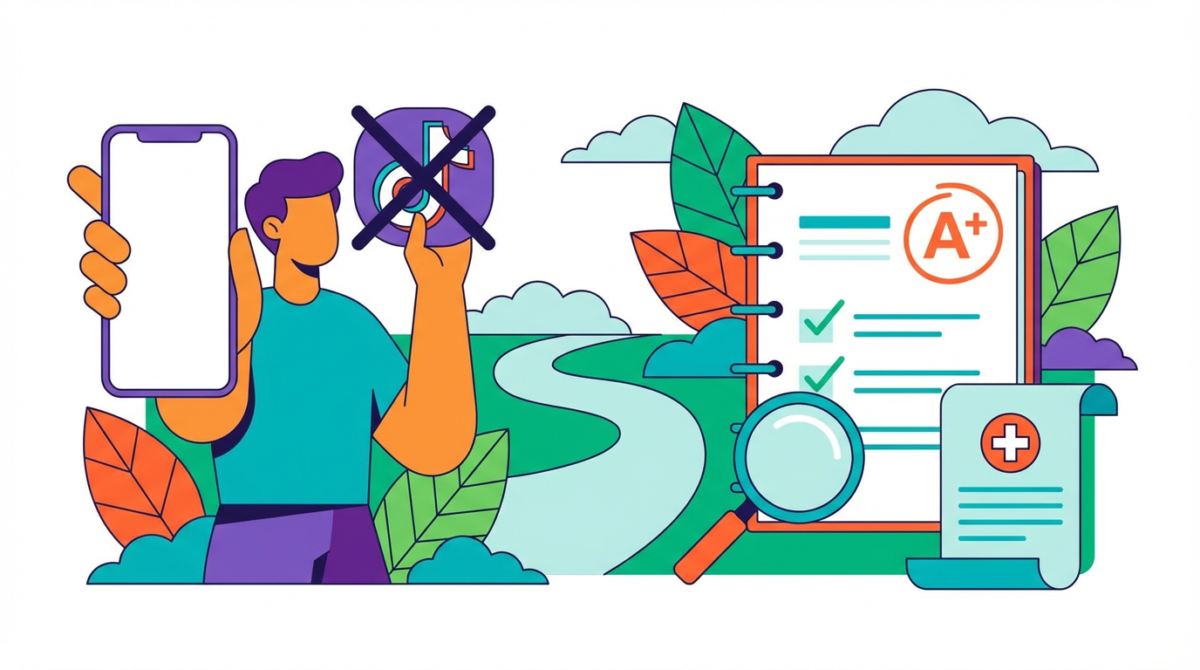
So on a random Tuesday, I deleted it. No announcement. No “taking a break” caption. Just gone.

Illustration for I Deleted Instagram for Three Months After Reading the Surgeon General's Social Media Warning — Here's My Honest Report Card
Illustration for I Deleted Instagram for Three Months After Reading the Surgeon General’s Social Media Warning — Here’s My Honest Report Card

The First Month: Everything Tastes Weird

The first two weeks were exactly as awkward as you’d expect. My thumb knew the muscle memory. I’d reach for my phone and start the motion to open an app that wasn’t there anymore, then just stand there like a person who’d forgotten their line in a play. The phantom buzzing was real. That weird anxiety where you feel like you’re missing something important, even though you know rationally that nothing important happens on Instagram. It’s performative theater in miniature, and yet somehow the fear of missing the performance was almost physical.

What surprised me was how much mental real estate the app had been renting. I didn’t just lose Instagram. I lost this weird background radiation of comparison and documentation and performance that had been humming underneath everything. I’d scroll on my morning coffee without really thinking about it. I’d check between meetings. I’d open it before bed, which was genuinely stupid because then I’d be wired for another forty-five minutes. The app had become so normalized that I couldn’t really see how much I was using it until I wasn’t.

Around week three, I started actually noticing things again. Not in some enlightened way where I suddenly became present and mindful. More like, I had this weird pocket of time I didn’t know what to do with. I’d be sitting on the couch and actually have to choose between doing something or doing nothing, instead of just defaulting to the phone.

Month Two and Three: The Actual Report Card

Here’s where I’m supposed to tell you that my mental health skyrocketed and I felt like a new person. There was genuine improvement, but it was quieter and weirder than that narrative. My sleep improved first. That was obvious and measurable. I wasn’t lying in bed scrolling until my eyes hurt. Within about two weeks, I was falling asleep faster and actually feeling rested. That alone was worth it, honestly.

The mood thing was harder to quantify. I didn’t feel dramatically happier. But I did notice fewer of those crushing moments where I’d compare my life unfavorably to someone else’s highlight reel. The research backs this up. A study published in JAMA Network Open found that when adolescents cut their social media use down to under thirty minutes a day, they saw a 19% reduction in depression symptoms over eight weeks. I wasn’t tracking my depression levels with a spreadsheet, but I did notice less of a baseline heaviness. Less of that ambient sadness that doesn’t have a clear source.

What I didn’t expect was how much I’d miss the connection aspect. Instagram isn’t just an anxiety machine. It’s also how I kept up with people I care about. Friends posting updates about their lives. Family photos from across the country. The weird community feeling of following people who make things you like. Deleting it meant I also deleted that thread of connection, and that actually hurt in a way I hadn’t anticipated.

The body image thing is real, though. Meta’s internal research came out during Senate hearings showing that users spending five or more hours daily reported significantly higher rates of body dissatisfaction. I wasn’t hitting five hours anymore, obviously, but even at my moderate use, I could feel the undertow of it. The constant comparisons. The subtle way that seeing other people’s bodies curated and filtered starts to warp what you think a body should look like. After three months off, I looked in the mirror and noticed I’d stopped thinking about my appearance through an Instagram lens. That was genuinely noticeable.

The Thing Nobody Tells You About Quitting

You don’t just have one realization and then you’re done. Around month three, I started getting antsy. The benefits were still there, but they’d plateaued. I wasn’t having these earth-shattering insights about technology anymore. I was just living. And living is actually kind of boring sometimes. I started thinking about redownloading it, not because I craved it, but because I was bored without it. That’s the weird trap, right? The app is designed to fill the spaces where you’d otherwise have to sit with yourself.

The American Psychological Association reported that the average American adult is now spending about two hours and twenty-seven minutes per day on social media, which is up from 2023. That’s not teenagers. That’s us. Meanwhile, countries like Australia have been passing legislation banning social media for anyone under sixteen, and other places are debating similar measures. There’s this moment happening where society is starting to acknowledge that maybe this isn’t just a personal choice anymore.

I did eventually redownload Instagram, but I didn’t go back to how it was. I set a thirty-minute daily limit using the app timer. I muted almost every account that made me feel bad about myself. I stopped scrolling before bed. I don’t open it first thing in the morning anymore. It’s functional now instead of compulsive. That might be the most important part of this whole thing: recognizing that the problem wasn’t Instagram existing. It was me using it on Instagram’s terms instead of my own.

So What Actually Changed

My sleep is better. My anxiety has genuinely decreased, though I can’t entirely credit Instagram for that. I’m more aware of when I’m reaching for my phone out of actual desire versus out of habit. I notice more of what’s happening around me instead of through a screen. My attention span has improved slightly, though I’m not going to pretend I’m some enlightened person now who reads books for eight hours straight. That’s not me.

What surprised me most is that the break didn’t solve anything permanently. It just showed me what was possible. It showed me that the anxiety I was feeling wasn’t inevitable. That the comparison spiral didn’t have to be my baseline. But it also showed me that I genuinely like some aspects of being connected to people through these platforms. The key was remembering that I get to decide how much of my time and attention I give them.

If you’re thinking about doing this, I won’t tell you it’ll be life-changing. But I will tell you it’s interesting. You learn stuff about yourself when you remove something you’ve been doing on autopilot for years. You realize what you actually miss and what you were just doing out of habit. And you get this weird pocket of time to fill with literally anything else. Even if that anything else is just sitting in silence, which used to feel like a punishment and now kind of feels like a gift.

Have you thought about trying this? I’m genuinely curious what other people find when they step away. Drop a note in the comments or reply if you want to talk about what happens in that space.
I Tried Hims & Hers’ New AI Therapy Tool. Here’s What Actually Happened When I Asked It My Hardest Questions.

The Thing Nobody Tells You About AI Mental Health Tools

So this happened around 3 AM on a Tuesday. I couldn’t sleep. Not the regular can’t-sleep, but the specific flavor where your brain won’t stop cataloging everything you’ve done wrong in the last five years. I opened my phone, scrolled past my actual therapist’s contact info, and tapped into the new AI coaching feature on the Hims & Hers app instead.

I Tried Hims & Hers' New AI Therapy Tool. Here's What Actually Happened When I Asked It My Hardest Questions.
I Tried Hims & Hers’ New AI Therapy Tool. Here’s What Actually Happened When I Asked It My Hardest Questions.

I want to be honest about why. I wasn’t looking for a replacement. I just wanted to see if something that promised instant access to mental health support would actually be there when I needed it at 3 AM, which my therapist of course was not. The whole AI mental health space exploded recently. Hims & Hers mental health services added their AI coaching feature in late 2025, and suddenly my social media feeds filled with therapists either celebrating or losing their minds about whether this was helpful innovation or the end of actual care. I wanted to find out for myself.

Illustration for I Tried Hims & Hers' New AI Therapy Tool. Here's What Actually Happened When I Asked It My Hardest Questions.
Illustration for I Tried Hims & Hers’ New AI Therapy Tool. Here’s What Actually Happened When I Asked It My Hardest Questions.

What I Tested (And Why the Debate Matters)

The feature sits right in the app alongside the option to book with actual human providers. That design choice is doing some work, isn’t it? It’s telling you these are supposed to coexist. The AI coaching promised accessibility, affordability, and responses whenever I needed them. The therapist community, though, was not staying quiet about it. The American Counseling Association issued a position statement in mid-2025 basically saying that AI should not try to become therapy, full stop. They were clear: the relationship between therapist and client is not something an algorithm replicates.

I took that criticism seriously. I also took seriously that people desperately want mental health support and often can’t access it. The global market for AI mental health tools hit $1.1 billion in 2024 and is projected to balloon to $4.2 billion by 2028. That’s not coming out of nowhere. Millions of people are actively reaching for these tools because they need something, and what they can get right now beats waiting months for an appointment.

So I opened the chat. I explained the 3 AM spiral. The AI asked clarifying questions. They felt reasonable. Not robotic exactly, but not quite natural either. Like talking to someone reading from excellent bullet points.

Where It Actually Helped (And Where It Fell Short)

Here’s what surprised me. For the first 15 minutes, it was useful. The AI suggested some grounding techniques I genuinely hadn’t thought of in that specific moment. It didn’t try to diagnose me or fix me or convince me everything was fine. It just offered practical stuff: naming five things I could see, breaking my worry into smaller pieces, asking whether my 3 AM thoughts would have the same weight in daylight.

But then I pushed it. I asked about something deeper, something I’m actually working through in real therapy. Something that requires context spanning years, that needs someone to remember what I said last week and notice the pattern I’m still not seeing clearly. The AI’s response was competent. It was kind. It just wasn’t responsive in the way that matters, which is the way that comes from actually knowing you across time.

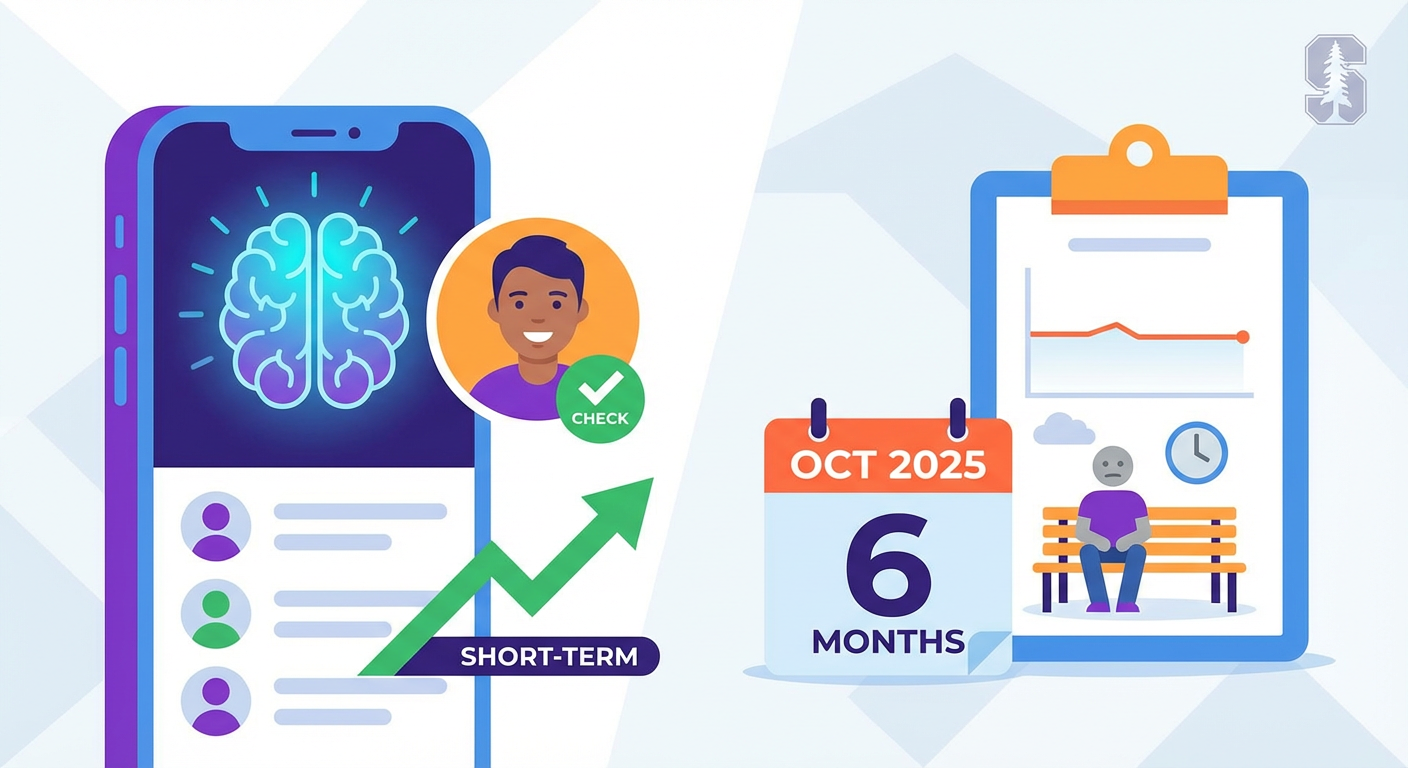
There’s a Stanford study published in October 2025 that keeps sitting in the back of my mind about this exact thing. They looked at people using AI mental health apps and found that sure, users reported feeling better in the short term. But at the six-month mark? No statistically significant improvement compared to people who were just on a waitlist. The initial relief was real. The lasting change wasn’t.

That doesn’t mean the tool is useless. It means it’s what it is: useful in moments, not transformative over time. I’m still turning that over.

The Regulatory Emptiness That Should Worry You

Here’s where things get a little unsettling. As of early 2026, the FDA has only cleared a handful of digital therapeutics for mental health. That means most AI wellness apps, including the one I was using, are operating without clinical regulatory oversight. None of this has been validated the way actual treatments are validated. The FDA digital health center of excellence exists to figure out how to regulate this stuff, but we’re still in the wild west phase.

That matters because someone vulnerable could absolutely mistake an AI interaction for actual clinical care. They might not seek help from a human provider because they convinced themselves the app is handling it. Or they might use it during a crisis when they actually need someone trained to recognize danger signs. These aren’t hypotheticals. These are the conversations mental health professionals are actually having.

What I kept thinking as I used the tool was this: the existence of something useful doesn’t mean it should replace something necessary. The fact that an AI can be available at 3 AM doesn’t mean it should be your primary source of mental health support. The gap between helpful and adequate is bigger than the tech industry usually wants to admit.

What This Actually Means (And What I’m Still Figuring Out)

I don’t have a clean conclusion here because I don’t think there is one yet. The AI coaching feature did something. It helped in a moment. It didn’t create harm that I could detect. It also didn’t do the deep work that actual therapy does. Both things are true simultaneously, and we’re collectively pretending we have to pick one.

Maybe the honest answer is that these tools have a real place for specific moments. The 3 AM spirals. The day when you can’t get an appointment for three months. The moment when you need something and nothing else is available. That’s not nothing. But it’s not a substitute for the actual relationship that creates lasting change either.

I’m still going to my therapist. I also used the AI tool again. I’m treating it like the thing it actually is rather than what either the cheerleaders or the skeptics want it to be. The gap between where we are and where we need to be in mental health care is so enormous that maybe we need multiple things working imperfectly rather than holding out for one perfect thing that doesn’t exist.

What’s your experience been with these tools? Have you used them? Are you a therapist watching this unfold? I’m genuinely curious what you’re seeing that I might be missing.

The Things I Quit Because They Made Me Worse at Being Me

Last Tuesday I caught myself rearranging my bookshelf by spine color instead of doing actual work. Not because it looked better that way, but because I’d seen someone’s rainbow-organized library on Instagram and suddenly my perfectly functional alphabetical system felt inadequate. That’s when I realized I’d been letting other people’s processes creep into mine again.

I’ve been keeping track of the things I’ve stopped doing over the past year. Not the obvious stuff like doom-scrolling or eating gas station burritos at midnight, but the subtler habits that seemed productive or meaningful until they weren’t. The things that made me feel like I was performing being myself instead of actually being myself.

Morning Pages Became Morning Performance

I started doing Julia Cameron’s morning pages because everyone swears by them. Three pages of stream-of-consciousness writing every morning to clear your head and unlock creativity. Sounds great in theory. In practice, I spent six months writing the same complaints about being tired and wondering what to have for breakfast.

The problem wasn’t the exercise itself but how I was doing it. I kept thinking about whether my pages were “good enough” or insightful enough, which defeats the entire point. I’d catch myself crafting clever observations about mundane things, turning my brain dump into a rough draft of something I might want to share later. Morning pages aren’t supposed to be shareable. They’re supposed to be garbage.

Now I just write when I have something to figure out, not because the calendar says it’s 7 AM. Sometimes that’s three pages, sometimes it’s three sentences on a napkin. The insight comes from the thinking, not from filling a quota.

The Productivity System That Made Me Less Productive

For eight months I maintained an elaborate task management system with color-coded priorities, energy levels, and time estimates. I had different contexts for different locations, recurring templates for weekly reviews, and tags for everything. I spent more time organizing my tasks than doing them.

The breaking point came when I realized I had a task called “update task management system” that had been rolling over for three weeks. I was procrastinating on my procrastination system. The irony was thick enough to spread on toast.

What I actually needed was embarrassingly simple: a piece of paper with today’s three most important things written on it. If I finish those, great. If not, at least I know why. The elaborate system made me feel like I was being productive while actually creating more work for myself. It’s the productivity equivalent of cleaning your desk instead of starting the project that’s due tomorrow.

Reading Like I Had Something to Prove

I used to keep detailed notes on every book I read, complete with page numbers and profound-sounding quotes. I told myself this was for future reference, but really I was building evidence that I was the kind of person who reads thoughtfully. The notes app on my phone became a graveyard of half-finished insights that I never looked at again.

The weird part is that taking notes made me remember less about what I read, not more. I was so focused on capturing the “important” parts that I stopped paying attention to how the ideas actually landed with me. I’d highlight passages that seemed significant rather than ones that genuinely sparked something.

Now I dog-ear pages and scribble in margins like a barbarian. If a book changes how I think about something, I’ll remember it. If it doesn’t, no amount of color-coded highlighting will make it stick. The books that matter leave tracks in how I see the world, not in my note-taking app.

The Weekly Review That Became Weekly Judgment

Every Sunday I’d sit down with my notebook and review the week. What went well, what didn’t, what to adjust for next week. This worked for about a month before it turned into a weekly session of beating myself up for not becoming the person I thought I should be by now.

The questions I was asking weren’t actually helpful. “Did I exercise enough?” is different from “How did moving my body feel this week?” The first one has a right answer that I probably didn’t hit. The second one gives me information I can use.

I still check in with myself regularly, but I ditched the formal structure. Instead of scheduled self-evaluation, I notice when something feels off and adjust in real time. It turns out I don’t need to wait until Sunday to realize that staying up until 2 AM scrolling my phone makes Tuesday morning miserable.

Why I’m Still Figuring This Out

The thread connecting all these abandoned habits is that they started as tools and became performances. I wasn’t doing morning pages to clear my head; I was doing them because that’s what writers do. I wasn’t tracking tasks to get things done; I was tracking them to feel organized. I wasn’t taking notes to engage with ideas; I was taking them to prove I was engaging with ideas.

The tricky thing about self-improvement is that it’s easy to mistake the appearance of having your act together for actually having your act together. Systems and habits can be genuinely useful, but they can also become elaborate ways of avoiding the messier work of figuring out what you actually want and why.

I’m curious about what you’ve stopped doing lately. Not the obvious bad habits, but the things that seemed like they should be working for you but somehow weren’t. The productive procrastination, the helpful habits that helped everything except the thing you were trying to help. Sometimes the best system is admitting you don’t need one.

Watching the World Learn to Love Bugs (And Other Tuesday Observations)

The Text That Started It All

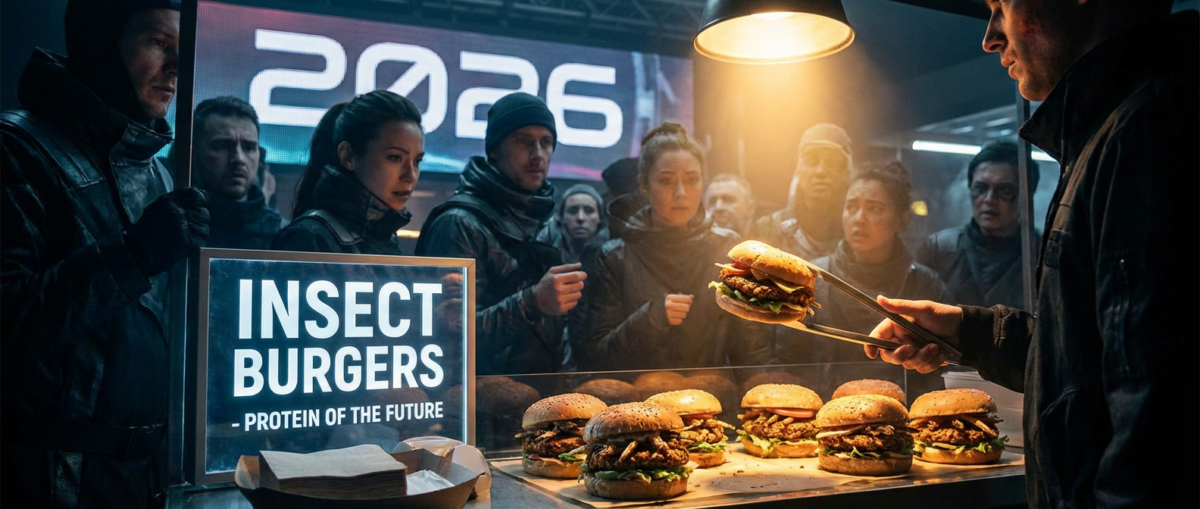
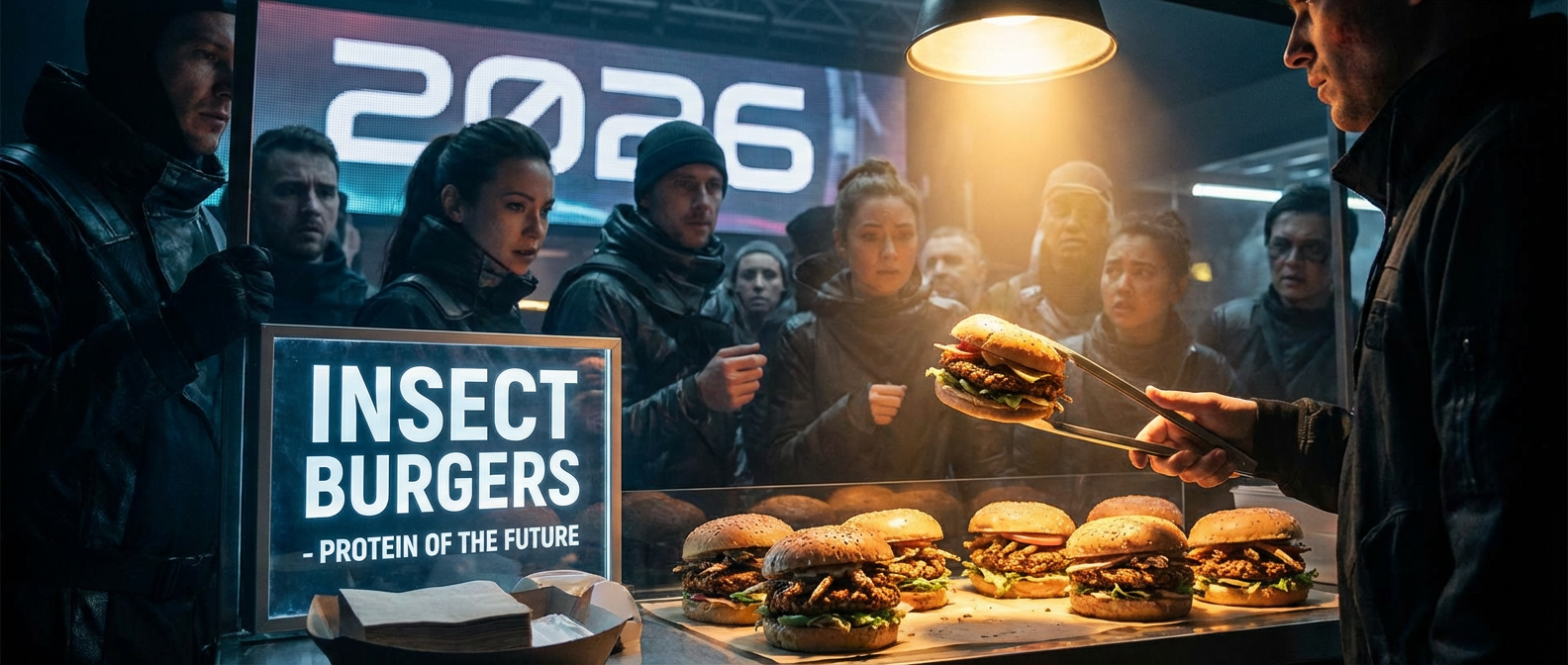
My neighbor Sarah texted me at 7:43 AM last Tuesday: “Just ate a cricket burger for breakfast and it was actually good???” Three question marks. That’s how you know someone’s worldview just shifted. I screenshotted it because something about that moment felt worth preserving. Not because cricket burgers are inherently fascinating, but because I’d been watching this slow-motion cultural flip happen for months, and Sarah’s text was the first time I saw it click for someone in real time.

Watching the World Learn to Love Bugs (And Other Tuesday Observations)

She’s not an early adopter. Sarah still calls everything “the wifi” and buys the same brand of cereal she’s eaten since college. But there she was, voluntarily eating insects before 8 AM on a weekday. Which got me thinking: how exactly did we get here? When did bug protein stop being a survivalist party trick and start being something normal people queue up for at Whole Foods?

Illustration for Watching the World Learn to Love Bugs (And Other Tuesday Observations)

Following the Money Trail (Because It Always Tells the Story)

The numbers paint a clearer picture than any marketing campaign could. Cricket farming got stupid cheap stupid fast. We’re talking about a 78% price drop in one year after those massive automated facilities opened in Texas and Ohio. Suddenly cricket protein wasn’t just environmentally virtuous, it was economically obvious. Cheaper than beef per gram of protein. When your wallet and your conscience point in the same direction, that’s when markets really move.

Then the Whole Foods cricket protein launch happened in March. Fifty thousand bags of cricket flour sold in week one. I remember standing in the baking aisle watching a woman in yoga pants casually toss a bag into her cart next to the almond flour and coconut oil. No hesitation. No dramatic moment of food revolution. Just Tuesday grocery shopping that happened to include insects.

The FDA approval for lab-grown cricket meat in February was the real catalyst though. Suddenly venture capital firms were throwing money at insect protein startups like it was 2021 crypto all over again. Four hundred percent increase in funding according to PitchBook. That’s not gradual adoption. That’s a stampede.

The David Chang Factor

You can track cultural shifts through what celebrity chefs are doing, and David Chang’s ‘Swarm’ restaurants tell you everything you need to know about where this is heading. Sold out for six months straight. Now they’re planning 100 locations. When a chef who built his reputation on elevating humble foods decides insects are worth his time, that’s not a gimmick. That’s market validation.

I tried to get into the downtown Swarm location three weeks ago. The hostess laughed. Not a mean laugh, just the laugh you give someone who clearly doesn’t understand how reservations work in 2026. “We’re booking into October,” she said. October. For bug food. The waiting list for eating insects is longer than most restaurant lifespans.

What’s interesting is how Chang’s approach stripped away the novelty factor. No dramatic presentation, no “guess what you just ate” reveals. Just really good food that happens to be made with cricket protein. The normalization happened through excellence, not explanation.

The Climate Math That Actually Matters

Here’s where the environmental angle gets real instead of theoretical. The UN insect farming sustainability report dropped some numbers that are hard to argue with: 97% fewer greenhouse gases than traditional livestock for equivalent protein. Not 10% better. Not 50% better. Ninety-seven percent.

That’s the kind of improvement that makes people pay attention even if they’re not particularly green-minded. When the environmental choice also happens to be the economical choice and increasingly the delicious choice, you’re not asking people to sacrifice anymore. You’re just asking them to try something new.

The shift feels different this time because it’s not being driven by guilt or shoulds. It’s being driven by actual advantages that stack up: cheaper, better for the planet, and if David Chang is right, tastier too. That’s how lasting change happens. Not through moral arguments, but through better options.

What I’m Watching For Next

I’m keeping an eye on my local grocery store. Not the fancy one, the regular one where my mom shops. When cricket flour shows up there, between the regular flour and the baking soda, with no special signage or explanatory text, that’s when we’ll know this stopped being a trend and became just another ingredient.

Sarah’s making cricket tacos this weekend. She invited me over to try them. “I got the recipe from my sister-in-law,” she said. Not from a food blog or a sustainability website. From her sister-in-law. That’s how you know something’s crossed over from novelty to normal. When recipes start traveling through family networks instead of influencer channels.

I’m curious what you’re seeing in your corner of the world. Are the cricket burgers showing up where you live yet? And more importantly, are people talking about them like they’re weird, or like they’re just another Tuesday lunch option?

The Three Work Projects That Made Me Remember Why I Don’t Hate My Job

The Museum Audio Guide That Nobody Asked For

Last month I spent four days recording narration for a tiny maritime museum’s self-guided tour. The pay was terrible and the deadline was impossible, but I kept saying yes to revisions because the curator kept sending me these excited emails about how visitors were finally spending more than twelve minutes in the exhibit halls.

Here’s what I learned: recording audio guides is like being a very patient dinner party guest who never gets interrupted. You have to sound interested in the thirty-seventh ship model without sounding manic. You have to pronounce “schooner” like it matters. The curator sent me a photo last week of an eight-year-old kid wearing the chunky headphones, completely absorbed in a display about fishing nets. That’s worth more than whatever I should have charged.

The Newsletter About Bird Migration That Seventeen People Read

I write a monthly newsletter for the local Audubon chapter. The subscriber count hovers around seventeen people, and I’m pretty sure three of them are my relatives who feel obligated. But every October, I get to spend a week tracking the hawk migration at the ridge outside town, then turn those notes into something readable.

This year I wrote about watching a Cooper’s hawk take a blue jay mid-flight, right over the Walmart parking lot. I described how the jay’s alarm call cut through the sound of shopping carts and car doors. Two days later, the chapter president forwarded me an email from a subscriber who said she’d started noticing hawks everywhere now. She’d never paid attention before. Sometimes the best work projects teach other people how to see.

The newsletter doesn’t pay anything, but it forces me to notice things. I’ve started carrying a notebook everywhere because you never know when a pileated woodpecker is going to land on a dead oak tree behind the gas station, and that image might be exactly what next month’s migration report needs.

The Training Manual That Actually Helps People

Six months ago, a small nonprofit hired me to rewrite their volunteer training materials. The old manual was forty-seven pages of Times New Roman density that somehow managed to explain nothing useful. New volunteers would show up to their first shift completely unprepared, then quit after two weeks of confusion.

I spent a morning shadowing three different volunteers. Watched them struggle with the ancient database system, saw them panic when angry callers got transferred to their line, noticed how they had to interrupt each other constantly to figure out basic procedures. The manual I wrote is twelve pages long and includes a one-page cheat sheet that lives next to every computer.

Last week, the program coordinator told me their volunteer retention rate has doubled. New people actually stay past the first month now. It turns out that when you give people the information they need to not feel stupid, they stick around. Who knew? This is the kind of project that makes me remember why I like solving problems with words.

What All Three Have in Common

None of these projects will win awards or land me speaking gigs. They don’t scale or disrupt anything. But they all share something that my higher-paying, more prestigious work often lacks: they help specific people do specific things better. The museum visitors understand more about maritime history. The bird watchers notice more hawks. The volunteers don’t quit in frustration.

I’m recommending this approach to anyone who’s tired of work that feels abstract or pointless. Look for projects where you can see the direct line between your effort and someone else’s improvement. It doesn’t have to be world-changing. It just has to be real. The eight-year-old with the headphones doesn’t care about my personal brand or professional development goals. She just wants to know why the ship models have different kinds of sails.

Maybe that’s enough. Maybe finding work that helps specific people solve specific problems is actually the most ambitious career goal of all. At least it’s the only kind that makes me excited to answer emails on Monday morning.