The Thing Nobody Tells You About AI Mental Health Tools
So this happened around 3 AM on a Tuesday. I couldn’t sleep. Not the regular can’t-sleep, but the specific flavor where your brain won’t stop cataloging everything you’ve done wrong in the last five years. I opened my phone, scrolled past my actual therapist’s contact info, and tapped into the new AI coaching feature on the Hims & Hers app instead.

I want to be honest about why. I wasn’t looking for a replacement. I just wanted to see if something that promised instant access to mental health support would actually be there when I needed it at 3 AM, which my therapist of course was not. The whole AI mental health space exploded recently. Hims & Hers mental health services added their AI coaching feature in late 2025, and suddenly my social media feeds filled with therapists either celebrating or losing their minds about whether this was helpful innovation or the end of actual care. I wanted to find out for myself.
What I Tested (And Why the Debate Matters)
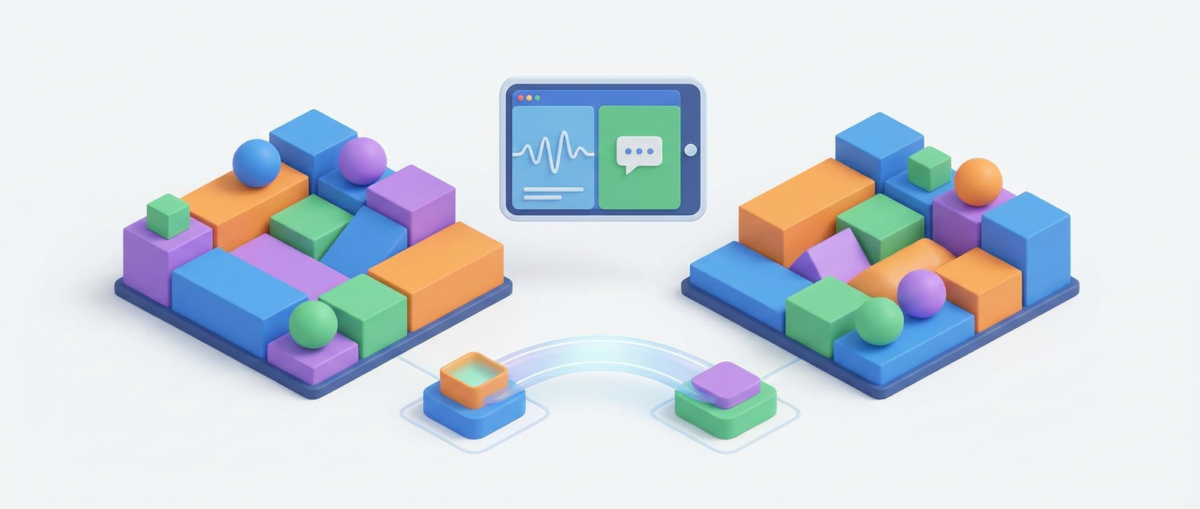
The feature sits right in the app alongside the option to book with actual human providers. That design choice is doing some work, isn’t it? It’s telling you these are supposed to coexist. The AI coaching promised accessibility, affordability, and responses whenever I needed them. The therapist community, though, was not staying quiet about it. The American Counseling Association issued a position statement in mid-2025 basically saying that AI should not try to become therapy, full stop. They were clear: the relationship between therapist and client is not something an algorithm replicates.
I took that criticism seriously. I also took seriously that people desperately want mental health support and often can’t access it. The global market for AI mental health tools hit $1.1 billion in 2024 and is projected to balloon to $4.2 billion by 2028. That’s not coming out of nowhere. Millions of people are actively reaching for these tools because they need something, and what they can get right now beats waiting months for an appointment.
So I opened the chat. I explained the 3 AM spiral. The AI asked clarifying questions. They felt reasonable. Not robotic exactly, but not quite natural either. Like talking to someone reading from excellent bullet points.
Where It Actually Helped (And Where It Fell Short)
Here’s what surprised me. For the first 15 minutes, it was useful. The AI suggested some grounding techniques I genuinely hadn’t thought of in that specific moment. It didn’t try to diagnose me or fix me or convince me everything was fine. It just offered practical stuff: naming five things I could see, breaking my worry into smaller pieces, asking whether my 3 AM thoughts would have the same weight in daylight.
But then I pushed it. I asked about something deeper, something I’m actually working through in real therapy. Something that requires context spanning years, that needs someone to remember what I said last week and notice the pattern I’m still not seeing clearly. The AI’s response was competent. It was kind. It just wasn’t responsive in the way that matters, which is the way that comes from actually knowing you across time.
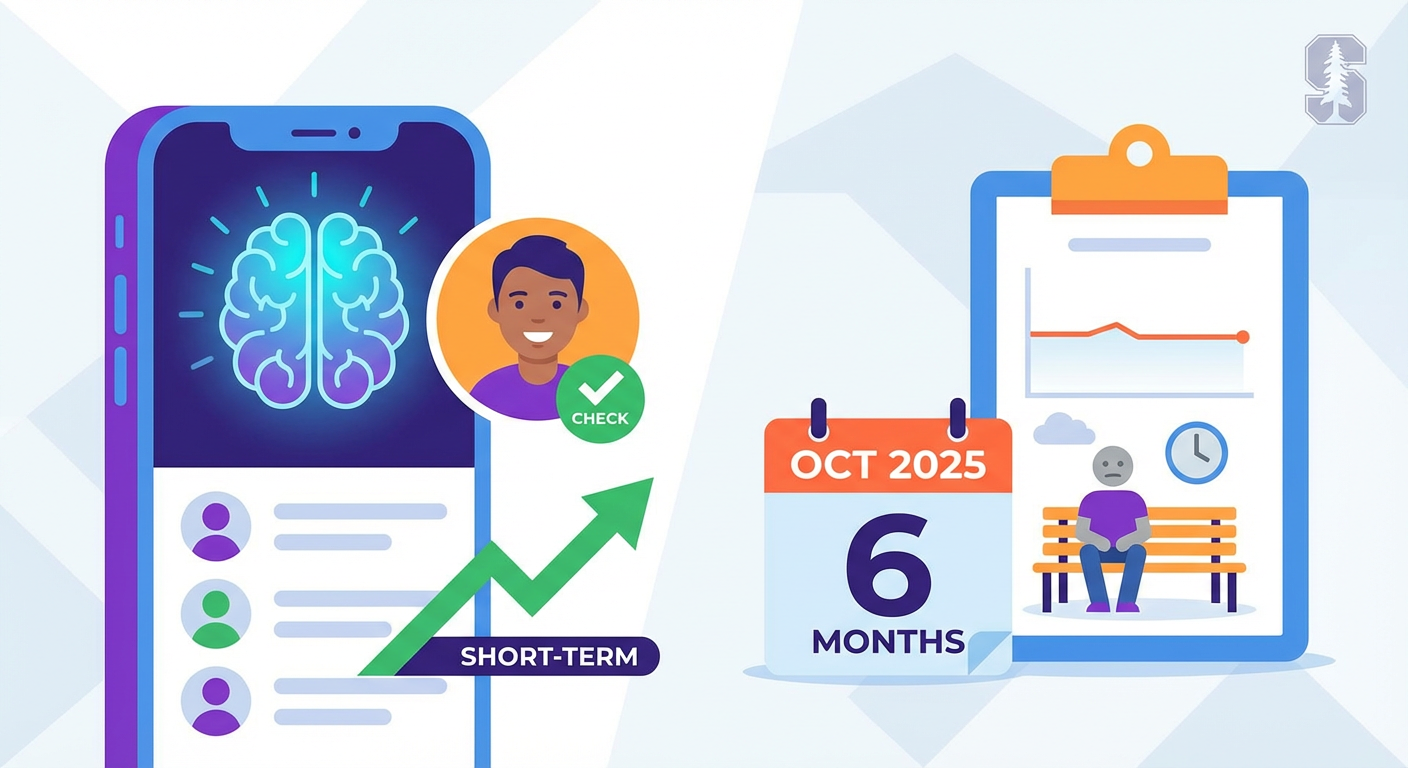
There’s a Stanford study published in October 2025 that keeps sitting in the back of my mind about this exact thing. They looked at people using AI mental health apps and found that sure, users reported feeling better in the short term. But at the six-month mark? No statistically significant improvement compared to people who were just on a waitlist. The initial relief was real. The lasting change wasn’t.
That doesn’t mean the tool is useless. It means it’s what it is: useful in moments, not transformative over time. I’m still turning that over.
The Regulatory Emptiness That Should Worry You
Here’s where things get a little unsettling. As of early 2026, the FDA has only cleared a handful of digital therapeutics for mental health. That means most AI wellness apps, including the one I was using, are operating without clinical regulatory oversight. None of this has been validated the way actual treatments are validated. The FDA digital health center of excellence exists to figure out how to regulate this stuff, but we’re still in the wild west phase.
That matters because someone vulnerable could absolutely mistake an AI interaction for actual clinical care. They might not seek help from a human provider because they convinced themselves the app is handling it. Or they might use it during a crisis when they actually need someone trained to recognize danger signs. These aren’t hypotheticals. These are the conversations mental health professionals are actually having.
What I kept thinking as I used the tool was this: the existence of something useful doesn’t mean it should replace something necessary. The fact that an AI can be available at 3 AM doesn’t mean it should be your primary source of mental health support. The gap between helpful and adequate is bigger than the tech industry usually wants to admit.
What This Actually Means (And What I’m Still Figuring Out)
I don’t have a clean conclusion here because I don’t think there is one yet. The AI coaching feature did something. It helped in a moment. It didn’t create harm that I could detect. It also didn’t do the deep work that actual therapy does. Both things are true simultaneously, and we’re collectively pretending we have to pick one.
Maybe the honest answer is that these tools have a real place for specific moments. The 3 AM spirals. The day when you can’t get an appointment for three months. The moment when you need something and nothing else is available. That’s not nothing. But it’s not a substitute for the actual relationship that creates lasting change either.
I’m still going to my therapist. I also used the AI tool again. I’m treating it like the thing it actually is rather than what either the cheerleaders or the skeptics want it to be. The gap between where we are and where we need to be in mental health care is so enormous that maybe we need multiple things working imperfectly rather than holding out for one perfect thing that doesn’t exist.
What’s your experience been with these tools? Have you used them? Are you a therapist watching this unfold? I’m genuinely curious what you’re seeing that I might be missing.
