The Skeptic’s Starting Point
Let me be honest. When I first heard about 15-minute cities, I rolled my eyes so hard I probably pulled something. The whole concept sounded like urban planning buzzword bingo. Walk everywhere? Buy local? Sure, Karen, let me just abandon my car and pretend the grocery store sells everything I need within a pleasant stroll from my front door.
But then my friend Maya moved to one of Portland’s pilot districts. She kept posting these annoyingly cheerful updates about walking to the farmers market and biking to work. The worst part? She looked genuinely happy. So when my lease came up and I found an apartment in what Portland calls a “15-minute neighborhood,” I figured why not give it a shot. Worst case scenario, I’d have plenty of material for complaining.
I downloaded a carbon tracking app, mapped out my usual weekly routes, and prepared to prove that this whole 15-minute thing was just privileged nonsense. Spoiler alert: I was wrong about almost everything.

Week One: Everything Takes Forever (Or So I Thought)
The first week was rough. My brain kept reaching for car keys that now lived in a drawer. Walking to the coffee shop took twelve minutes instead of a three-minute drive plus five minutes hunting for parking. Math check: I was actually saving time, but it felt slower because walking forces you to exist in the world instead of just passing through it.
The grocery situation almost broke me. My old routine involved weekly Target runs where I’d buy everything from toilet paper to dinner ingredients in one efficient sweep. Now I was making multiple trips to different shops. The corner market for basics, the butcher two blocks over, the pharmacy across the street from my office. It felt inefficient and frankly exhausting.
But here’s where my brain started shifting. By day five, I realized I wasn’t just shopping differently, I was planning differently. Instead of bulk-buying everything, I was buying what I actually needed. My fridge wasn’t a graveyard of good intentions anymore. Those overpriced organic greens weren’t turning into expensive compost.
The Numbers Don’t Lie (Even When Your Feelings Do)
By week two, the carbon tracking app was showing results I didn’t expect. My daily transport emissions had dropped from an average of 8.2 pounds of CO2 to 2.1 pounds. The math was startling, but I figured it was just a fluke of short-term behavior change.
Then I started noticing other shifts. My monthly transport costs plummeted. No gas, minimal parking fees, and I was walking past tempting retail displays instead of driving to malls on weekends. A recent University of Melbourne study found that households in 15-minute neighborhoods save about $3,200 annually on transport costs. I’m only one month in, but I’m already seeing why.
Portland’s data backs this up too. Their pilot districts saw a 28% jump in walking and cycling, which sounds abstract until you’re living it. You start recognizing your neighbors. The guy with the golden retriever who walks the same route every morning. The woman who always has the best garden. These aren’t Instagram moments. They’re just human moments that happen when you’re moving slowly enough to notice.
The Global Picture Becomes Personal
What really shifted my perspective was learning this isn’t just some Portland experiment. Paris finished their 15-minute city project in twelve arrondissements this January. Barcelona’s superblock expansion cut car traffic by 32% while boosting local business revenue by 18% last year. These aren’t feel-good pilot programs anymore. They’re working urban policy.
The C40 Cities 15-minute neighborhood report from March shows 47 major cities have adopted these plans. When nearly fifty major cities are betting their urban future on walkability, maybe the skeptics like past-me should pay attention.
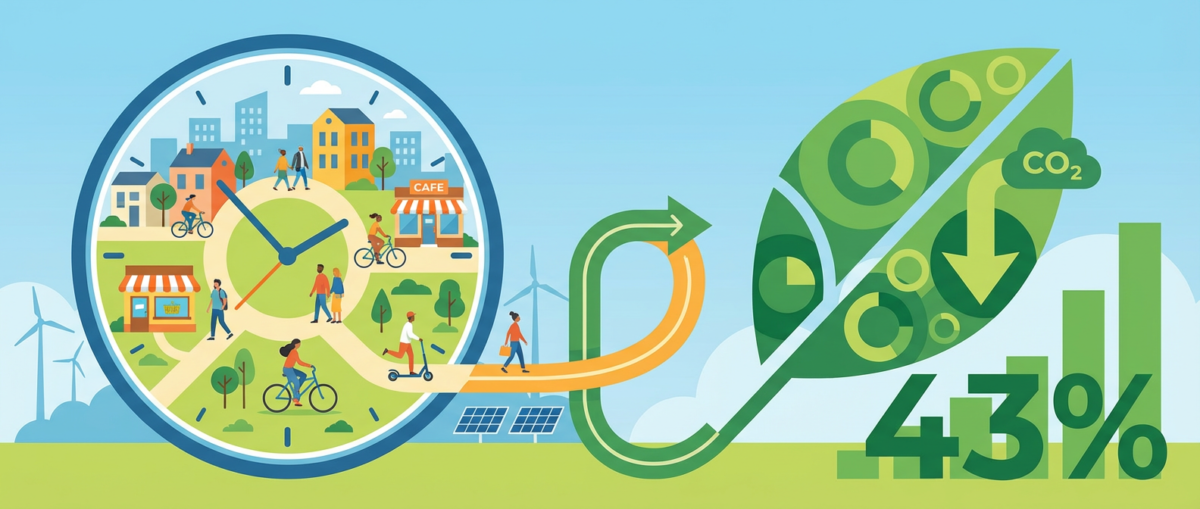
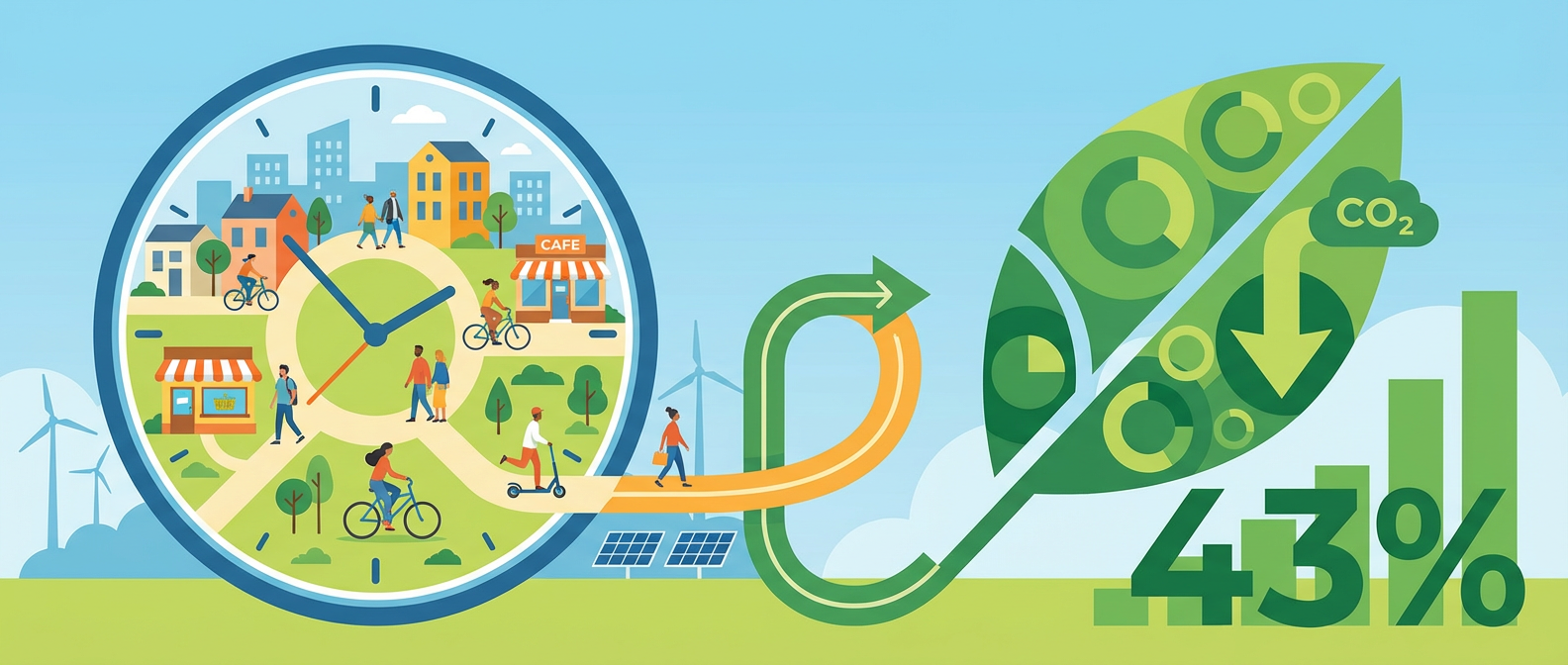
By week three, I stopped tracking my steps because walking wasn’t exercise anymore. It was just how I moved through my day. The 43% carbon footprint reduction wasn’t from some heroic lifestyle overhaul. It was from tiny, repeated choices that became automatic. Bike to work instead of drive. Walk to dinner instead of calling an Uber. Buy bread from the bakery instead of the supermarket.
What Actually Changed (Besides My Mind)
The biggest surprise wasn’t the environmental impact or the money saved. It was how different my days felt. When everything you need is within walking distance, you stop rushing between destinations. You notice when the corner café changes their seasonal menu. You chat with the postal worker. You become part of a neighborhood instead of just living in one.
I’m not saying this lifestyle works for everyone. If you’re caring for elderly parents across town or working multiple jobs in different cities, the 15-minute model might not fit. But for those of us who can make it work, the benefits stack up in ways I didn’t expect.
My carbon footprint dropped 43% without buying an electric car or installing solar panels. I just changed how I move through space. Sometimes the biggest changes come from the smallest shifts in perspective.
Have you tried any version of 15-minute living, even accidentally? I’d love to hear what you’ve noticed about your own movement patterns and whether they match what the data suggests is happening in cities worldwide.
