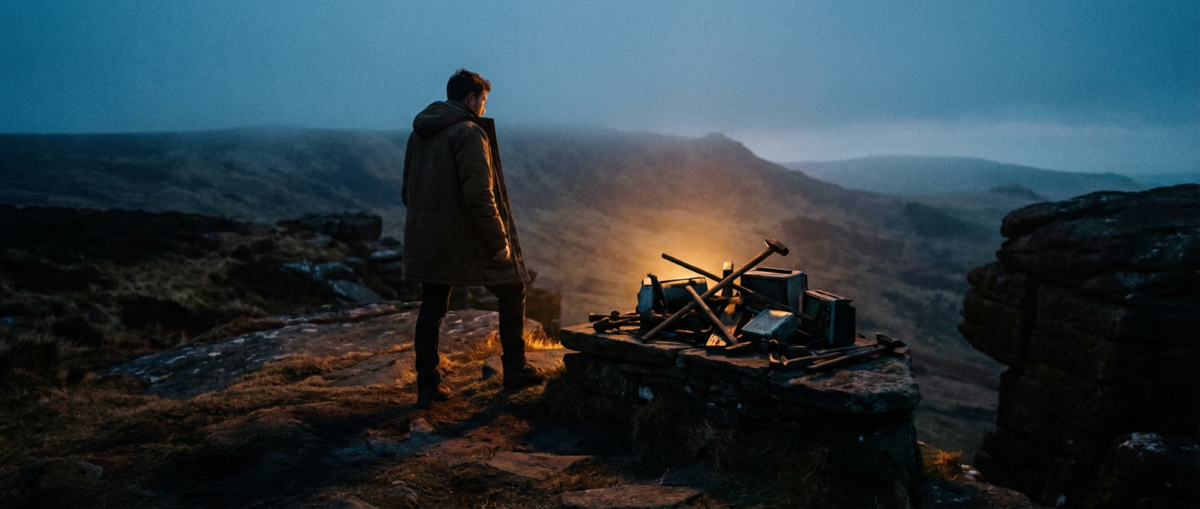
The Morning Ritual That Wasn’t
I stopped setting my alarm for 5:30 AM in March. For six months, I’d been one of those people who posts sunrise photos on Instagram with captions about “winning the day before it starts.” You know the type. I was convinced that early rising would transform me into someone more disciplined, more intentional, more worthy of those productivity podcasts I kept downloading.
Here’s what actually happens when you force yourself awake at dawn: your body keeps a running tally of sleep debt. Mine was apparently keeping very detailed records. I’d stumble to the kitchen, make coffee with the precision of someone defusing a bomb, and sit there staring at my journal like it had personally wronged me. The sunrise was pretty, I’ll give it that. But so is a sunset, and sunsets don’t require you to hate yourself at 5:31 AM when you realize you’ve been sitting in the dark for ten minutes because you forgot to turn on the lights.
Now I wake up when my body decides it’s ready, usually around 7. The world hasn’t ended. My productivity hasn’t crashed into some dark abyss of mediocrity. Turns out, the secret to a good day isn’t suffering through the first hour of it.
The Friendship Audit
I quit trying to maintain friendships that felt like work assignments. You know the ones. Where every text feels calculated, where you find yourself rehearsing casual conversation, where hanging out leaves you more drained than a back-to-back meeting day. I used to think this made me a bad person. Now I think it makes me honest.
There was this one friend who only called when they needed something. Not big things, just advice about dating, someone to complain to about work, validation for decisions they’d already made. I’d answer every time, playing therapist while they half-listened and waited for their turn to speak. One day I just stopped picking up. They noticed after about three weeks.
The guilt hit me immediately and hard. But then I realized I had more energy for the people who actually wanted to know how I was doing, not just what I could do for them. Funny how much space opens up when you stop filling it with obligation disguised as friendship.
The Content Consumption Diet
I deleted the news apps from my phone in August. Not because I wanted to stick my head in the sand, but because I realized I was consuming information like junk food. Constantly, mindlessly, with diminishing returns. I’d refresh the same headlines seventeen times a day, as if something earth-shattering might have happened in the thirty minutes since I last checked.
The breaking news notifications were the absolute worst. My phone would buzz with urgent alerts about things that weren’t urgent, important updates that weren’t important, developing stories that had been developing for months. I started noticing how my shoulders tensed every time that notification sound went off. My body was treating every news alert like a personal emergency.
Now I read the news once a day, usually with my morning coffee, from actual websites where I have to make an intentional choice to visit. The world kept spinning without my constant surveillance. The important stuff still reaches me. The stuff that doesn’t probably wasn’t that important anyway.
The Optimization Obsession
I stopped tracking everything. Steps, water intake, meditation minutes, sleep quality, mood ratings, productivity scores. For two years, I was quantifying my life with the dedication of a research scientist. I had apps that measured apps that measured other apps. My phone was basically a data collection device that occasionally made phone calls.
The tracking started innocently enough. A fitness app here, a habit tracker there. But soon I was rating every day on a scale of one to ten, logging every meal, timing every workout, measuring every moment of rest. I became my own personal surveillance state, and the data was never good enough. There was always something to optimize, some metric to improve, some way I was falling short of my own algorithmic expectations.
The day I deleted all the tracking apps, I felt lighter. Not because I lost weight, though I stopped obsessing over that number too, but because I stopped treating my life like a performance review. I still exercise, but now I do it because it feels good, not because my phone expects it of me. I sleep when I’m tired, eat when I’m hungry, and somehow, miraculously, I’m still alive.
The Social Media Performance
I quit posting about my life like it was a brand. This might be the hardest one to explain without sounding preachy, because we’re all performing our lives to some degree now. But I realized I was curating my experiences before I’d even finished having them, thinking about the caption while the moment was still happening.
The vacation photos were the absolute worst. I’d spend more time staging the perfect shot than actually looking at whatever I was supposedly there to see. Beach sunsets became content opportunities. Good meals became flat lays. Friends became co-stars in my personal documentary. I was the director, cinematographer, and star of my own life, and somehow I’d forgotten to actually live it.
Now I take pictures for me. Sometimes I share them, sometimes I don’t. The decision isn’t driven by likes or comments or the mysterious algorithm gods. It’s driven by whether I want to share something, which turns out to be a much lower bar and a much more honest one.
These aren’t lessons, exactly. They’re just things that happened, adjustments made along the way, small rebellions against the person I thought I was supposed to be. Some of them stuck, some of them didn’t. Some of them might come back in different forms. But for now, this is what letting go looks like. Messier than I expected, quieter than I hoped, and somehow exactly right.
What did you quit this year? I’m curious about the small rebellions, the quiet decisions, the things you stopped doing that nobody else noticed but changed everything for you.
